WSU Admission Requirements – Walter Sisulu University
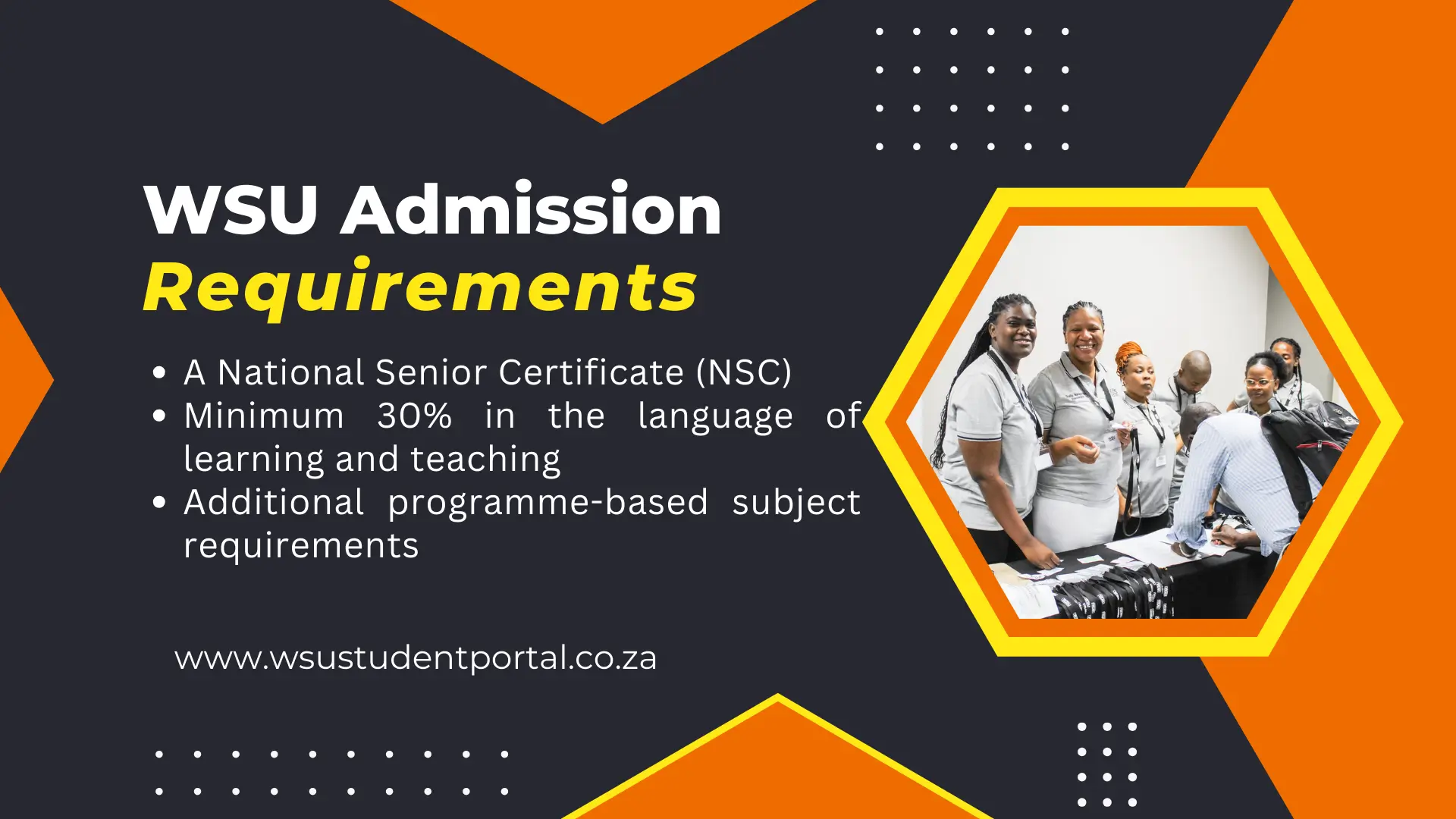
WSU Admission Requirements. Getting into university is one of the biggest turning points in a student’s life, and I’ve seen this journey up close many times. As someone who has personally helped students prepare their WSU applications, I understand the excitement, confusion, and pressure that comes with meeting admission requirements.
Many students start with questions like, “Is my APS enough?”, “Do I qualify for a diploma?”, or “What if my marks are too low?” and I’ve watched them transform that uncertainty into confidence once they understand how WSU admissions really work.
Walter Sisulu University offers more than just qualifications, it provides a real learning environment where students grow academically and personally. I’ve seen learners come in shy and unsure, only to leave as confident graduates ready for the world. Before you take that first step, it’s important to understand the WSU Admission Requirements, because the right understanding can make your entire application journey smoother and stress-free.
WSU Admission Requirements
1. Understanding University Life at WSU
University is not just about textbooks it’s a life-changing experience. At WSU, students enjoy:
- A vibrant campus atmosphere
- Access to societies, sports clubs, and organizations
- Lecturers who genuinely care about your academic development
- An inclusive environment with students from diverse backgrounds
This experience helps build confidence, leadership, communication skills, and independence qualities you will carry throughout your professional life.
2. Minimum Admission Requirements at WSU
WSU follows the official Department of Higher Education (DHET) guidelines, plus its own internal programme-specific criteria. Understanding these requirements is the first step toward your successful application.
Higher Certificate Requirements
To qualify for a Higher Certificate at WSU, you must have:
- A National Senior Certificate (NSC)
- Minimum 30% in the language of learning and teaching
- Additional programme-based subject requirements (depending on your chosen field)
Higher Certificates are often chosen by students who want to build foundational skills before moving into diploma studies.
Diploma Requirements
For diploma programmes, WSU requires:
- NSC with at least 30% in the language of teaching
- Achievement rating of 3 (40–49%) in four 20-credit subjects
- Programme-specific subject combinations (e.g., accounting, sciences, maths depending on the qualification)
Diploma programmes are great for students who want a balance of academic and practical learning.
Bachelor’s Degree Requirements
If you’re aiming for a degree programme, requirements are more advanced:
- NSC with 30% in the language of teaching
- Achievement rating of 4 (50–59%) in four 20-credit subjects
- Subject-specific requirements depending on the programme (e.g., engineering, health sciences, ICT)
Degree programmes prepare students for high-level professional careers or postgraduate studies.
3. Students With International Qualifications
WSU accepts international students through official guidelines:
- Applications are reviewed according to HESA (Higher Education South Africa) rules
- Some qualifications may require SAQA benchmarking
- WSU’s International Office assists students through the process
This makes WSU a diverse and globally connected institution.
4. Mature Age Endorsements
If you are older than 23 and do not meet the standard NSC requirements, you may still qualify for admission through:
- General Prospectus Rule 1.13
- Diploma applicants need an NSC with a diploma endorsement
- Degree applicants need NSC with bachelor endorsement
This pathway is helpful for adults who want to resume their academic journey.
5. Understanding the WSU APS (Admission Point Score)
One of the most important factors in WSU admissions is the APS score. APS helps determine whether you qualify for diploma or degree programmes.
How APS is Calculated at WSU
WSU calculates APS using:
- Best 6 subjects (or 7 subjects for Education programmes including Life Orientation)
- Language of learning + one additional language
- Best 4 other subjects
- Life Orientation only counted for certain qualifications
This ensures fairness and accuracy in the admission process.
| Percentage | APS Score |
|---|---|
| 90–100 | 8 |
| 80–89 | 7 |
| 70–79 | 6 |
| 60–69 | 5 |
| 50–59 | 4 |
| 40–49 | 3 |
| 30–39 | 2 |
| 0–29 | 1 |
Example
Here is a real example based on students I’ve advised in the past:
- English HL – 65% → APS 5
- First Additional Language – 58% → APS 4
- Mathematics – 72% → APS 6
- Physical Sciences – 63% → APS 5
- Life Sciences – 55% → APS 4
- Geography – 68% → APS 5
Total APS: 29
This student qualified for a WSU science-related degree with no issue.
My Advice to Students Applying to WSU
From my personal experience guiding applicants, here are some valuable insights:
- Students often underestimate the importance of the language requirement make sure your marks in English meet the minimum.
- APS calculators online can sometimes be wrong; always use WSU official table.
- Apply early WSU receives thousands of applications each year.
- Programme-specific subjects matter. For example, wanting to study Accounting without having done Maths can reduce your chances.
- Don’t stress if you barely meet the minimum WSU looks at overall performance, not just a single subject.
FAQS About WSU Admission Requirements
Conclusion
Applying to Walter Sisulu University is a major step toward building your future. Understanding the WSU Admission Requirements helps you plan better and avoid mistakes. With strong academic preparation, the right subjects, and a clear idea of your APS score, you can confidently apply and increase your chances of success.
Based on my experience working with students, WSU offers not just an academic qualification but a life-changing journey filled with growth, learning, and memorable experiences. If you meet the minimum requirements, take the leap and apply—you might just be one step away from a brighter future.
For Further Info Please Visit Official Website.